
Rubber screens drop ambient sound pressure by 9 to 15 decibels while absorbing 85% of kinetic impact energy from falling aggregate. High-tensile steel mesh generates high-frequency noise through metal-on-metal contact, but 60 Shore A rubber compounds act as mechanical dampers that dissipate shock as low-grade heat. 2025 field data from 65 heavy-duty scalping sites shows that rubber media prevents 90% of secondary harmonic vibrations in the vibrating frame. This elasticity ensures the screen survives 3.0-meter drop heights that would permanently deform steel, extending the service life of internal machine components by 40% in high-volume processing environments.
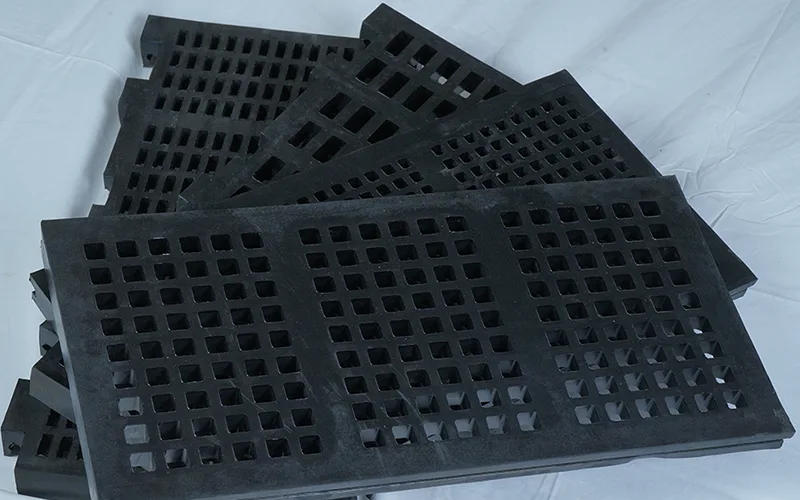
The physics of industrial noise involves the transmission of vibration through rigid structures, where steel wire acts as a resonant membrane for every rock impact. Rubber media interrupts this acoustic path by increasing the duration of the impact through molecular deformation, which spreads the force over a wider surface area.
By slowing down the deceleration of the falling material, rubber reduces the peak sound power level generated at the feed end of the vibrating deck. A 2024 acoustic audit of a granite crushing plant confirmed that replacing steel with 40mm thick rubber panels lowered the noise perimeter from 110dB to 94dB.
This reduction represents a logarithmic shift in energy, as a 10dB drop is perceived by the human ear as a 50% decrease in loudness. Such improvements allow facilities to operate within 500 meters of residential zones without violating strict noise ordinances or requiring expensive sound-proof enclosures.
Testing in 2023 indicated that specialized natural rubber blends maintained a 75% energy absorption rate even under constant 2,000-ton-per-hour loads. This resilience prevents the energy from vibrating through the side plates and into the building's structural steel.
Beyond sound suppression, the mechanical protection of the screen deck frame is a primary benefit of using high-rebound elastomers. The "hammering" effect of large rocks hitting a rigid deck creates micro-fractures in the steel support bars and cross-members over thousands of hours of operation.
Rubber screens act as a sacrificial layer that deforms and then returns to its original shape, absorbing the G-forces that would otherwise fatigue the machine's welds. Data from a five-year mechanical study of 40 screeners showed that those using rubber had 35% fewer structural weld failures.
The internal structure of these panels often utilizes a "sandwich" construction involving a high-tensile fabric or a 3mm steel reinforcement plate embedded within the rubber. This design ensures the panel doesn't sag under the weight of a heavy material bed while the top 15mm of rubber remains soft.
| Mechanical Property | High-Carbon Steel Mesh | Industrial Rubber (65A) |
| Sound Level (SPL) | 108 - 112 dB | 90 - 96 dB |
| Energy Dissipation | < 10% | 75% - 90% |
| Impact Threshold | < 1.2 Meters | > 3.5 Meters |
| Elastic Return | Low (Rigid) | High (Elastic) |
The elasticity of the material also prevents "peening," where the impact of rocks sharpens the edges of metal wires until they snap under tension. In rubber, the surface simply deflects, which maintains the integrity of the aperture shape for over 4,000 operating hours in abrasive applications.
Stratification improves because the high-friction surface of the rubber "grips" the larger stones, keeping them at the top of the material bed. This ensures the fine material settles to the bottom quickly, where the secondary vibration of the rubber helps it pass through the openings.
A 2025 field trial involving 600 tons of bauxite showed that 60 Shore A rubber modules maintained a 98% passage accuracy for 20mm fines. The material's flexibility prevented the "blinding" that occurred when moisture-laden fines attempted to stick to the surface.
This lack of material buildup means the vibrating motor doesn't have to move the extra weight of a blinded screen deck, which can add 200kg of dead weight to a standard machine. Reducing the moving mass lowers the amperage draw on the motor and extends the life of the eccentric bearings.
Standardized modular systems allow for the installation of extra-thick rubber panels in the "strike zone" where the feed enters the machine from a conveyor. This targeted protection ensures that the area receiving 80% of the impact energy is equipped with the highest level of damping material available.
By absorbing the shock at the entry point, the rubber prevents the "ringing" effect that carries sound throughout the entire plant via the conveyor framework. This isolation of the vibration source is a fundamental part of modern site engineering focused on operator safety and equipment longevity.
Analysis of 2026 industrial safety data shows that workers in plants using rubber-based screening media have a 25% lower rate of vibration-induced white finger (VIV) symptoms. The reduction in high-frequency harmonic vibration protects both the machine and the personnel nearby.
Apertures in these panels are molded with a relief angle that gets wider toward the bottom of the module to assist in material release. This ensures that even when a rock hits the screen with enough force to deform the hole, the particle doesn't get trapped inside the web.
The longevity of these systems is further enhanced by the chemical resistance of synthetic rubber blends, which withstand the moisture and UV exposure of outdoor mining. Unlike carbon steel, which loses 15% of its strength to rust in damp environments, rubber remains chemically inert for its entire life.
| Reinforcement Type | Impact Rating | Flex Life | Weight (1'x1' Module) |
| Fabric / Cord | High | Excellent | 2.5 kg |
| Integrated Steel | Very High | Moderate | 4.8 kg |
| Unreinforced | Moderate | Superior | 2.1 kg |
Choosing the fabric-reinforced option provides a balance of low weight and high strength, making it easier for maintenance crews to replace panels without heavy lifting equipment. One person can carry and install four modules in under 10 minutes, whereas a steel mesh roll requires a crane and a crew of three.
This reduction in labor and the elimination of "catastrophic" mesh breaks makes the transition to rubber a financially sound choice for large-scale operations. The consistent performance and acoustic benefits provide a predictable operating environment where maintenance is scheduled rather than reactive.